From Macros to Perimenopause, EGYM Head Coach Bridget Moroney Talks Benefits of Strength Training for Women and Debunking Classic Myths
Category: For Employees
Author: Danica de Jong · Publication: 2026-03-04
Perimenopause — the fun new buzzword haunting female millennials’ algorithms, right next to the Glamour Shots we took in the 90s and collectively agreed never to speak of again. Those lingering bouts of lethargy, brain fog, and sleepless nights are finally having their “ah-ha” moment — turns out, it’s not just me!
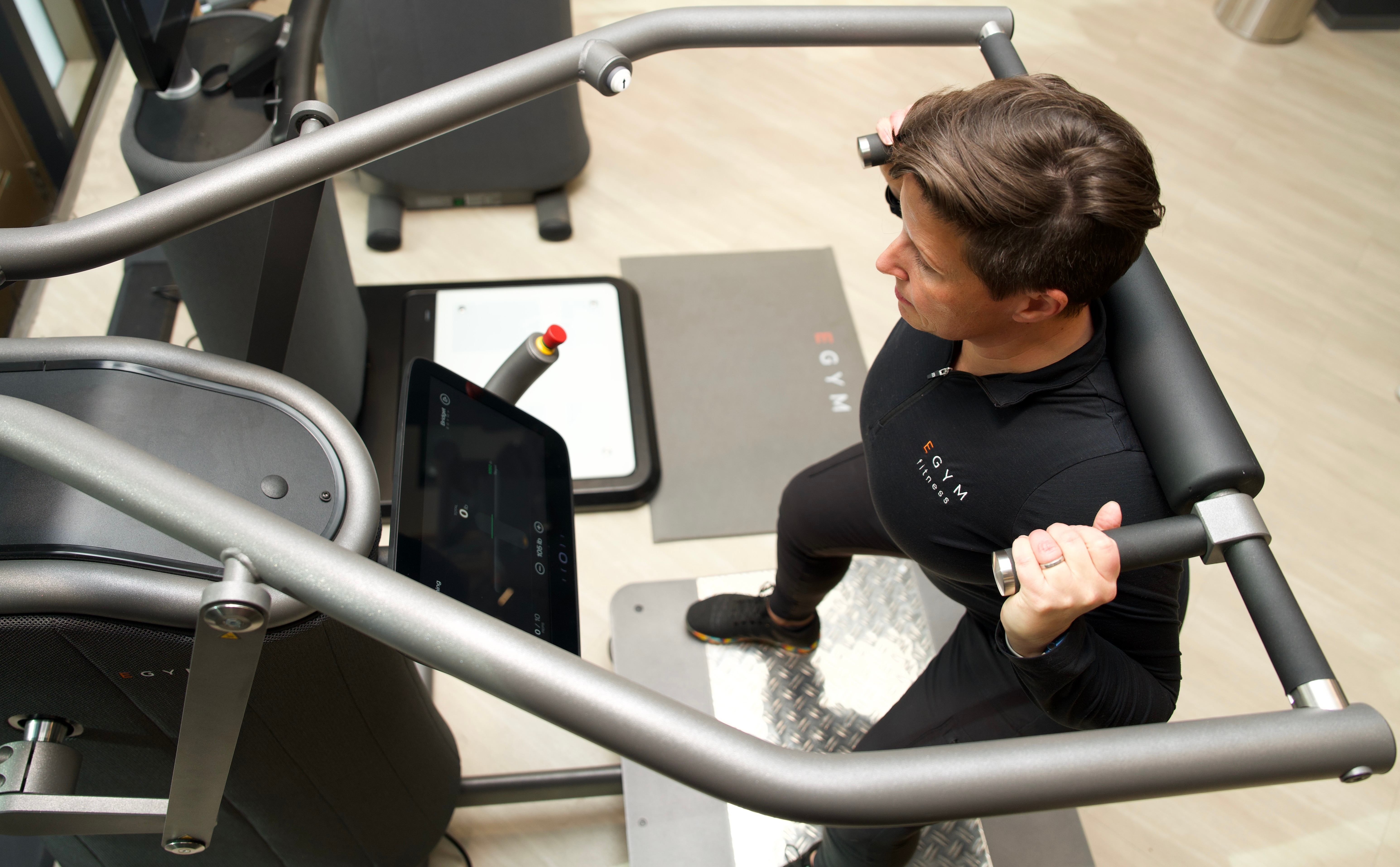
I sat down with certified trainer Bridget Moroney, Head Coach at EGYM Fitness Denver, who shares science-backed ways that strength training and nutrition can help counter these shifts. Drawing from her evolution from CrossFit athlete to full-time coach, Bridget emphasizes the power of building muscle as “metabolic currency.”
Q: What sparked your passion for fitness and nutrition?
Bridget: I grew up playing sports like track and soccer and got really curious about how to optimize my performance, so I began reading books on training and nutrition.
After college, I discovered CrossFit, which became my gateway into powerlifting, Olympic lifting, and strength and conditioning. Seeing coaches build careers in that world made me think, ‘Maybe I could do this too.’
Q: How does strength training help women in perimenopause (30s-50s)?
Bridget: Firstly, it signals your body to maintain bone density against osteoporosis. It also boosts testosterone and growth hormone for resilience, improves insulin sensitivity for metabolism, and deepens sleep by creating healthy fatigue which helps break cycles of exhaustion.
Q: What’s your advice for those who are just getting started on their fitness journey?
Bridget:
Get blood panels first to baseline your hormone levels and consult with your doctor.
Aim for 3-4 strength sessions weekly with compounds like squats and deadlifts
Pair with 2-3 cardio sessions for heart health but prioritize lifting now.
Falls are the leading cause of injury death among older women. With over 8 million older women falling each year in the U.S., building muscle is one of the most protective things we can do. (CDC, 2023)
Q: Any perimenopause-specific tweaks for busy women 30-45?
Bridget: There are a lot of great apps that help you track symptoms and auto-regulate for bloating or fatigue, but stay consistent. What I like about EGYM's smart technology is that the equipment auto-calibrates weights, enforces form to prevent injury, and can be adapted for postpartum recovery etc. which is perfect for your journey.
Q: What are the most common workout myths you can help us debunk?
Bridget: Some of the most common myths I hear are:
“I’ll get bulky”
First of all, I’ve been trying to get bulky for 30 years — it doesn’t happen by accident. Building noticeable size requires intentional high-calorie eating, progressive overload, specific programming, and of course, genetics; most women will instead gain muscle tone, strength, and better body composition.“Women should only use light weights/high reps”
Actually, women can and should train heavy. Training heavy supports strength, muscle, bone density, and metabolic health.
Historically, women were told to stay in the 15–20 rep range while men trained 8–10, but research and experience show women can often do more reps at a given percentage of their max and handle more training volume with slightly shorter rest. “Women are too fragile for ‘men's’ training. Actually, people forget that female bodies are built tough and are resilient (childbirth anyone?)“I ‘cycle sync’ my workouts and avoid strength training most of the month.”
Cycle-syncing has good intentions but in practice it often leaves women with only one solid week of strength training per month, which isn't enough stimulus to build muscle or maintain bone density. The better framework is auto-regulation: you keep lifting consistently, but you adjust based on how you actually feel that day. Here's how I think about it by phase:Follicular + Ovulation (roughly days 1-14): Energy and strength tend to be higher. This is a great time to push intensity, add load, or attempt PRs.
Luteal (days 15-28): Progesterone rises and recovery takes longer. You might feel heavier or more fatigued. Don't stop. Reduce load by 10-20%, shorten sessions, or swap a heavy day for moderate volume. The workout still counts!
One thing I do flag: there's research showing ligament laxity increases around ovulation due to estrogen peaks, which can raise injury risk, particularly in the knees and ankles. This isn't a reason to stop training, but it is a reason to be deliberate about form, avoid max-effort jumping or pivoting under fatigue, and add extra warm-up time.
Bottom line: your cycle is data, not a program. Use it to adjust intensity and recovery, not as a reason to skip the work!
Q: What do you think about popular diet trends like intermittent fasting,
Bridget: Diet trends should be used as tools you can experiment with, not identities you should marry yourself to. Just because something works for a month… is it sustainable for you? Like intermittent fasting…There are definitely benefits especially around becoming more aware of your true hunger cues. But most of the big fasting studies were done on men, and women often start to “crash” after a while because they generally need more support in stress management, recovery, and nutrition. For many women in their 30s and 40s navigating perimenopause symptoms like fatigue and brain fog, pushing hard fasting windows can become another stressor rather than a solution.
I lean more toward the high-protein “diet,” especially for women who have historically under-eaten protein. Start with one gram of protein per pound of lean body mass, because protein supports hormones, enzymatic processes, and the muscle that protects your metabolic and hormonal health. In my view, if a trend nudges women to hit adequate protein consistently, it’s likely a net win.
Also, many women say they “do better on low carb,” but often their bodies are just used to functioning that way; in reality, thyroid and overall energy can improve when they eat enough healthy carbohydrates from whole foods like fruits, vegetables, grains, and potatoes. For fats, I’d recommend monounsaturated sources (avocados, olive oil, nuts and seeds) and omega‑3s from salmon or quality fish/krill oils for inflammation, heart, and brain health.
Her bottom line for women 30–45
Use trends short term for learning, not lifelong rules.
Prioritize protein first, then adequate whole‑food carbs and fats.
Notice when a protocol starts making you “feel like crap”—that’s your sign it’s not sustainable.
Whenever possible, experiment with the support of a coach, nutritionist, or doctor who understands women’s hormones and stress load.
Last Question: Can you give us a sample weekly routine you’d recommend?
Bridget: This is where something like a Wellpass membership comes in handy because you can focus on strength training and utilize partners within the network to compliment your fitness routine. I love using my membership for new skills and challenges. Right now, I'm really into rock climbing and go to Ubergrippen near my home in Castle Rock! Here's what I recommend:
Mon/Wed/Fri: Strength training at EGYM Fitness Denver (lower body focus)
Tuesday/Thursday: Upper strength + cardio
Saturday: Endurance/mobility at CorePower Yoga
Sunday: Rest with breathwork at Reset Mind and Body or Upswell

About Bridget
Bridget is Head Coach at EGYM Fitness Denver, where she leverages smart gym technology to deliver personalized strength training that auto-calibrates weights, enforces proper form, and adapts programs for all fitness levels—from beginners to those navigating perimenopause.
Her credentials include CrossFit Level 1, ISSA Strength & Conditioning, Precision Nutrition Level 1, Human Potential Coach (health, fitness, mindset, and executive coaching), and Precision Nutrition Sleep, Stress & Recovery (near completion). While serving a general population, her women's health insights come organically from being a woman in this age group, plus years coaching female clients and collaborating with specialists.
Ready to build your metabolic retirement fund? Book a free EGYM gym tour or learn how to get unlimited access to gyms and studios through a Wellpass membership!

